



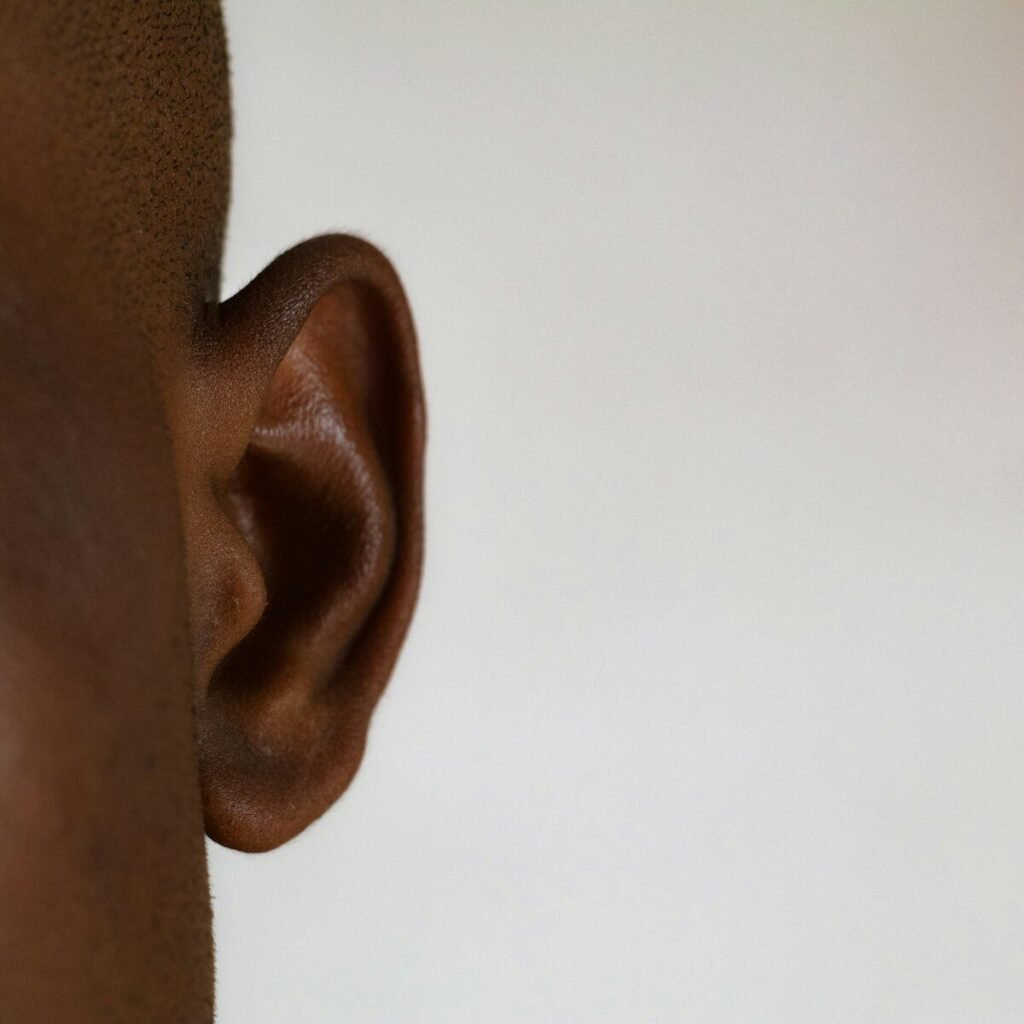
Ear Correction Surgery
Why Mr Potter
16 years experience
0.5% long-term pain
0% revision procedures
0% suture failure
0% infections
0% skin breakdown
PHIN patient satisfaction score: 99%
PHIN is an independent government audit of consultant patient outcomes, randomly sampling post-operative patients. A 99% satisfaction score places Mr Potter among the highest-rated plastic surgeons in the country.
Prominent Ear Correction
Otoplasty | Pinnaplasty
Recovery — Otoplasty
Patients may return to work after 2 days depending on their work environment.
Days 1 – Head bandaged and balaclava worn continuously
Day 3-5 – Any skin discolouration settles;
7 days – Wound review at hospital; dressings removed; Patients wear a balaclava during the first week.
2 weeks – Most patients return to work
6 weeks – Balaclava worn at night until this point
- Mild discomfort only; simple oral pain relief for two days is usually sufficient
- Avoid coughing, straining and bending for at least one week
- Avoid wearing earrings for two weeks after the procedure
- Do not drive until you can safely perform an emergency manoeuvre, turn the head freely and pain-free, and have adequate vision if wearing the balaclava
- Avoid any future piercing to the upper part of the ear; if further ear procedures are being considered, discuss with Mr Potter first
The Procedure
Otoplasty mostly be performed under local anaesthetic, can also be performed under general anaesthetic as a day case. The procedure takes approximately two hours. Most patients are discharged on the day of surgery. Incisions are hidden behind the ears.
Split Earlobe Correction
Split earlobes — whether partial tears or complete divisions — are most commonly caused by trauma from an earring. Mr Potter corrects both small and large splits under local anaesthetic in approximately one hour. There are no dressings required and patients can shower from the day after surgery. Sutures are removed at one week.
Expanded Earlobe Correction
Stretched or expanded earlobes — whether from gauge piercings or gradual elongation over time — are corrected surgically under local anaesthetic. The procedure takes approximately one hour. The resulting scar is placed neatly within the natural crease beside the ear, where it becomes imperceptible. Sutures are removed at one week.
Recovery — Earlobe Correction
Both earlobe procedures are minor outpatient procedures with minimal downtime. Dressings are minimal — typically a surgical tape or antibiotic cream — and patients can shower from the day after surgery. Sutures are removed at one week.
Earlobe Correction
Earlobe concerns fall into two categories, both correctable under local anaesthetic as a straightforward outpatient procedure.
- Discomfort — mild; typically managed with simple oral pain relief for two days
- Skin discolouration — uncommon; settles within three to five days where it occurs
- Suture failure — Mr Potter’s outcome data records 0% suture failure across his career; suture failure can cause recurrence of the prominence
- Recurrence of prominence or asymmetry — rare with the suture technique; Mr Potter will assess both ears carefully before recommending any procedure
- Cauliflower ear — rare complication specific to ear cartilage surgery
- Peaked or pointed ear — rare; can result from over-correction of the anti-helical fold
- Loss of part of the ear — exceptionally rare
- Infection — uncommon; avoid earrings for two weeks post-operatively to minimise this risk
- Scarring — incisions are placed behind the ear and are not visible
- DVT / pulmonary embolus — where general anaesthetic is used; specialist stockings are provided during your stay
- Further procedures — where any adjustments are needed, Mr Potter and his hospital teams are happy to facilitate further surgery
What Patients Say
Frequently Asked Questions
What causes prominent ears?
Prominent ears are caused by one or both of two structural issues — an underdeveloped fold in the ear cartilage (the anti-helical fold), or a conchal bowl anchored to the head at a wider angle than average. The ears are rarely larger than normal; they simply sit further from the head.
How does Mr Potter correct prominent ears?
Mr Potter uses a suture-based technique that recreates the anti-helical fold and repositions the conchal bowl using permanent internal sutures. This approach carries significantly fewer complications than cartilage excision and produces a natural, stable result. All incisions are placed behind the ear and are not visible.
Is otoplasty performed under local or general anaesthetic?
Otoplasty can be performed under local anaesthetic, but most patients choose general anaesthetic. Mr Potter will discuss the options with you during consultation.
Can ear correction be performed in children?
Yes — prominent ear correction is commonly performed in younger patients. Mr Potter will advise on timing and suitability during consultation.
What is the difference between split and expanded earlobe correction?
Split earlobe correction repairs tears or divisions in the lobe, most commonly caused by earring trauma. Expanded earlobe correction reduces and reshapes a stretched or elongated lobe. Both are minor outpatient procedures performed under local anaesthetic with minimal downtime.
Will there be visible scarring after earlobe correction?
Scars are minimal. For split earlobe repair, the wound is closed neatly with sutures removed at one week. For expanded earlobe correction, the scar is placed within the natural crease beside the ear, where it becomes imperceptible.
How long is the recovery after otoplasty?
Most patients return to work within two weeks. Swelling and any discolouration settle within the first week. The head is bandaged for the first seven days, after which the balaclava is worn at night only for a further six weeks to protect the ear position during sleep.
Can prominent ear surgery be performed on children?
Yes. Prominent ear surgery (otoplasty) can be performed on children once the ears have reached near full development.
Where does Mr Potter perform ear correction surgery?
Mr Potter performs ear correction surgery at the Manor Hospital in Oxford, Ridgeway Hospital in Swindon, Stratum Clinic in Wootton Oxfordshire, ProDerm in Cheltenham, and Interface Business Park in Royal Wootton Bassett.
Book a Consultation
Contact us if you have any health concerns or are looking to get a consultation. You can contact Matthew Potter by using the form below or contact him through one of the available telephone numbers or email addresses listed on this page.
Private Secretary & All Correspondence
T. 07917 965717
Swindon - Ridgeway Hospital
T. 01793 814848
Cheltenham - ProDerm, Festival House
T. 0800 0489230
Oxfordshire - Stratum Clinic,
Wootton Business Park
T. 01865 320790
Cotswold Surgical Partnership, Royal Wootton Bassett
T: 0808 2803560
Oxford - The Manor Hospital
T. 01865 307777
Contact Lissie on 07917 965717 or use the form below.