



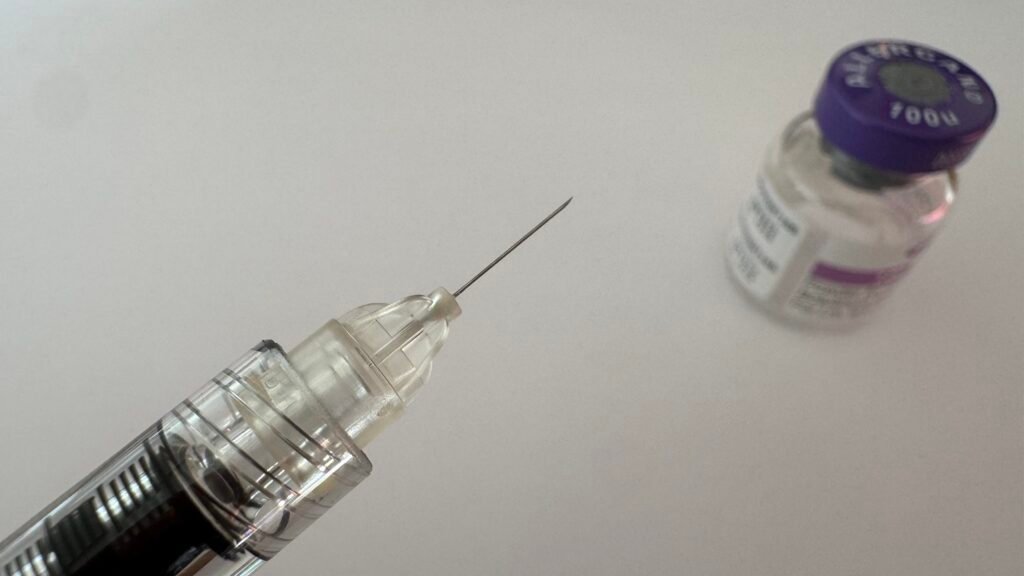
Muscle Relaxing Injections
Why Mr Potter
15
years performing muscle relaxing injections
Originally used in NHS practice for facial palsy — deep clinical understanding of facial muscle function
Tailored dose and technique for every patient
Two-week review and top-up included
Novel forehead technique — movement maintained, lines reduced
PHIN
Patient satisfaction score: 99%
PHIN is an independent government audit of consultant patient outcomes, randomly sampling post-operative patients. A 99% satisfaction score places Mr Potter among the highest-rated plastic surgeons in the country.
Mr Potter's Approach
Tailored, not templated
Every patient has a different muscle pattern, different areas of concern, and a different threshold for how much movement they want to maintain. Mr Potter assesses the activity of the underlying muscles at consultation — both visually and by feel — before deciding on dose, placement, and technique. The result should look like a refreshed, balanced version of you — not a face that has clearly been treated.
Maintaining movement — the forehead
A smooth, immobile forehead with normal movement and expression around the outside of the brow is a sign of poor administration.
Hyperhidrosis — excessive sweating
Muscle relaxing injections are also effective for hyperhidrosis — excessive sweating, most commonly of the underarms. The same product that relaxes facial muscles blocks the nerve signals that trigger sweat glands, providing relief that typically lasts three to four months.
Muscle relaxing injections are administered using a very fine micro-needle in a clinic setting. Mr Potter commonly uses a numbing cream applied to the forehead an hour prior to the injections to minimise any pain from the procedure. The first appointment takes up to an hour; repeat appointments are typically under 15 minutes.
Effects take three to fourteen days to develop fully. The results last approximately three months, after which the toxin gradually wears off and normal muscle activity returns. We have never seen any permanent effects with these injections or our technique.
- You can return to work immediately — any redness at the injection site settles within an hour
- Do not massage the treated area for the rest of the day — this can spread the product to unintended areas
- Avoid exercise, heavy lifting, straining and bending forward on the day of treatment — these increase the risk of bruising
- Avoid attending for injections having just exercised — this also increases bruising risk
- Makeup can be applied after the procedure but avoid rubbing or massaging the area
- Bruising — the most common side effect; minimised by Mr Potter’s technique using micro-needles and unhurried administration
- Mild headache — uncommon; typically resolves within a day
- Under or over-correction — addressed at the two-week review appointment, where Mr Potter will top up as needed
- Asymmetry — rare; assessed and addressed at the two-week review
- Eyelid weakness — weakness of the muscles that elevate or close the eyelid; has not occurred in Mr Potter’s patient series; temporary if it does
- Patients with an allergy to albumin or eggs
- Patients with muscular diseases or diseases of the nerves
- Patients taking certain antibiotics — Mr Potter will discuss this at your first consultation
Frequently Asked Questions
How do muscle relaxing injections work?
Botulinum toxin acts at the nerve-muscle interface, temporarily preventing the muscle from contracting. When the muscles under the skin stop contracting, the overlying skin stops bunching — reducing the appearance of dynamic wrinkles. After approximately three months the toxin’s effect wears off naturally and normal muscle activity returns.
Will I look frozen or unnatural?
Not with Mr Potter’s approach. The aim is always a refreshed, balanced result that maintains natural facial expression. Mr Potter tailors the dose and placement specifically to each patient’s muscle pattern — avoiding the over-treated look that results from a blanket approach. His forehead technique specifically maintains movement while reducing lines.
How long do results last?
Approximately three months. Effects then gradually wear off as the toxin’s action on the nerve decreases and normal muscle activity returns. There are no known permanent effects.
Is a follow-up appointment included?
Yes. Mr Potter reviews every patient two weeks after their primary treatment to assess the response and top up where needed. This is included as standard.
Can muscle relaxing injections treat excessive sweating?
Yes. Botulinum toxin injections into the underarms are an effective treatment for hyperhidrosis — excessive sweating. The product blocks the nerve signals that trigger sweat glands, typically providing three to four months of relief. Mr Potter has treated patients for this successfully.
Who should not have muscle relaxing injections?
Patients with an allergy to albumin or eggs, those with muscular or neurological diseases, and patients taking certain antibiotics should not have these injections. Mr Potter will discuss your medical history at your first consultation to confirm suitability.
Where does Mr Potter perform muscle relaxing injections?
At the Manor Hospital in Oxford, Ridgeway Hospital in Swindon, Stratum Clinic in Wootton Oxfordshire, ProDerm in Cheltenham, and Interface Business Park in Royal Wootton Bassett.
Book a Consultation
Contact us if you have any health concerns or are looking to get a consultation. You can contact Matthew Potter by using the form below or contact him through one of the available telephone numbers or email addresses listed on this page.
Private Secretary & All Correspondence
T. 07917 965717
Swindon - Ridgeway Hospital
T. 01793 814848
Cheltenham - ProDerm, Festival House
T. 0800 0489230
Oxfordshire - Stratum Clinic,
Wootton Business Park
T. 01865 320790
Cotswold Surgical Partnership, Royal Wootton Bassett
T: 0808 2803560
Oxford - The Manor Hospital
T. 01865 307777
Contact Lissie on 07917 965717 or use the form below.