



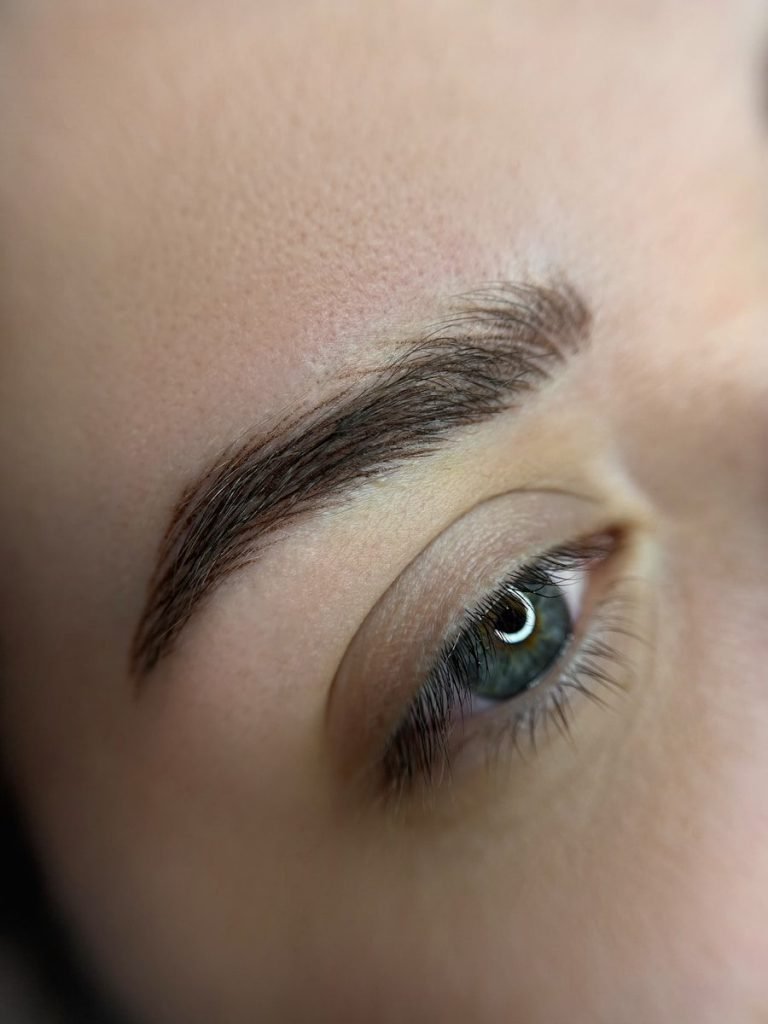
Brow Lift Surgery
A brow lift should make you look rested and brighter, not operated upon.
As we age, the brow descends. It creates a heaviness over the eyes, deepens forehead lines, and gives a persistently tired or stern expression that no longer reflects how you feel. For many patients, the issue is not the eyelids themselves but the brow sitting too low above them.
Mr Potter performs the lateral temporal lift, the direct brow lift and the pre-trichinal brow lift. The technique varies according to the needs of the patient, the anatomy of the brow and pattern of hair distribution. — a technique that lifts the outer brow upward and outward through an incision hidden entirely within the hairline. There are no visible scars. The result is a natural, refreshed appearance that restores the brow to where it belongs without the unnatural, over-lifted peak associated with older endoscopic methods.
Why Mr Potter
8 years performing brow lift surgery
0% facial nerve injury or paralysis
0% long-term pain
0% haematoma post-operatively
0% unplanned return to theatre within 30 days
0% long-term loss of sensation to the forehead
Average post-operative stay: 1 night
Return to office work: 2 weeks on average
PHIN patient satisfaction score: 99%
PHIN is an independent government audit of consultant patient outcomes, randomly sampling post-operative patients. A 99% satisfaction score places Mr Potter among the highest-rated plastic surgeons in the country.
Our Technique
The Lateral Temporal Brow Lift
When a Brow Lift is Combined with Eyelid Surgery
To reduce the upward pull of the forehead muscles on the brow after surgery, Mr Potter may recommend an injection of botulinum toxin to the forehead at least two weeks before the procedure. This is a straightforward outpatient appointment taking around 30 minutes, and it helps maintain the elevation achieved during surgery.
Preparing for Surgery
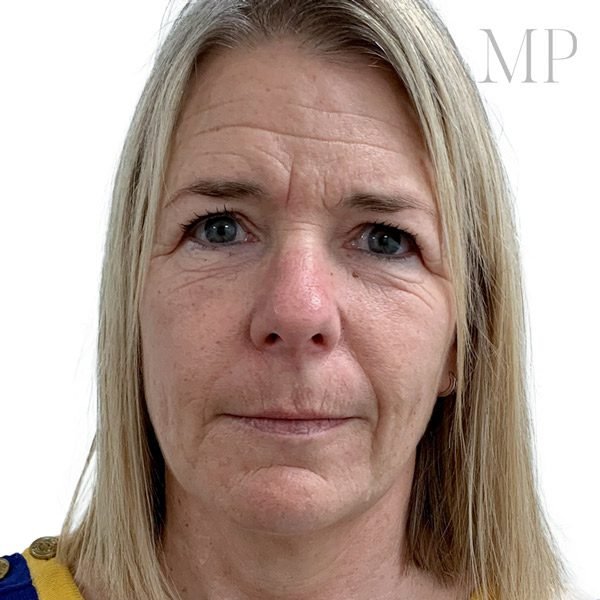
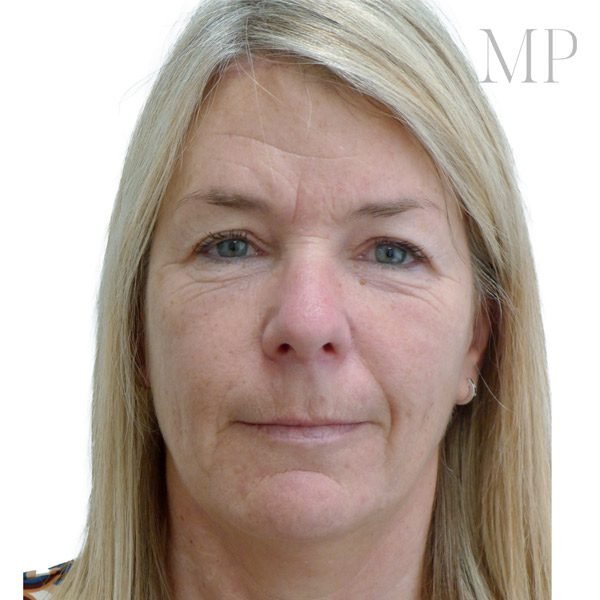
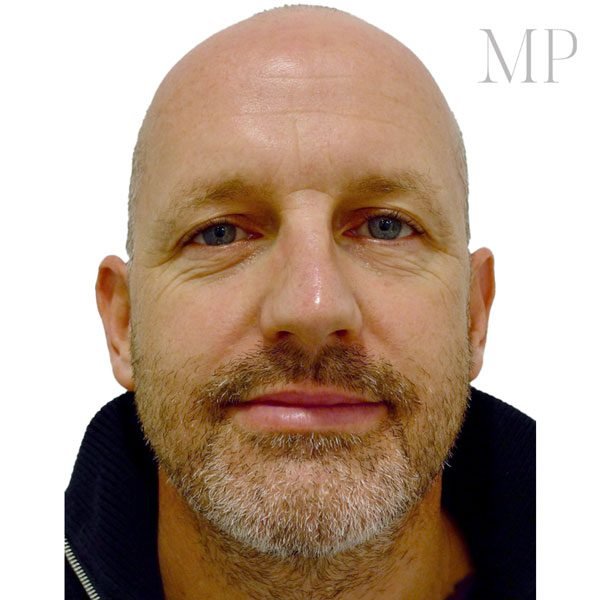
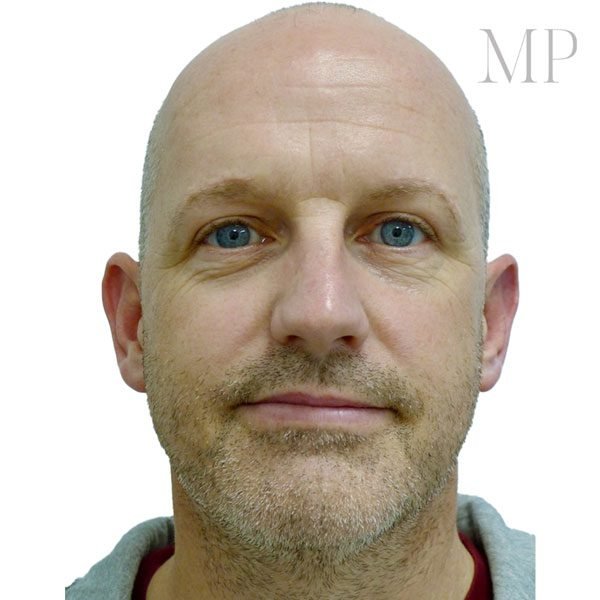
Patient Imagery
Your Recovery
Recovery Timeline
Days 1–3 – Swelling and bruising peaks; bruising around the eyes common; oral pain relief as needed
Day 1 onwards – Shower and wash the area daily
Day 10 – Sutures removed at nurse-led clinic
2 weeks – Most patients return to office-based work
3 weeks – First post-operative review with Mr Potter
1 month – Avoid contact lenses until this point
Do's & Don'ts
- Apply antibiotic ointment to operative sites each evening for two weeks
- Sleep with two to three pillows for the first week
- Avoid coughing, straining, and bending for at least two weeks
- Avoid strenuous exercise for 6 weeks
- Take oral pain relief for the first two to three days as needed — some patients experience headache rather than operative site pain; this settles with simple oral pain relief
- Do not drive until you can safely perform an emergency manoeuvre
The Procedure
What Happens on the Day
Average stay – day case or single night Preparing for surgery to reduce the down ward pull of some peri-orbital muscles we may use muscle relaxing injections 2 weeks prior to the surgery
You will be admitted on the morning of your procedure and seen by both the anaesthetist and Mr Potter before going to theatre. Your brow will be marked and you will have the opportunity to ask any final questions before surgery begins.
The procedure is performed under general anaesthetic and takes approximately one to two hours. Most patients stay one night in hospital and go home the following morning.
- Swelling and bruising — expected; bruising around the eyes is common and typically resolves within one week
- Headache — some patients experience headache after the procedure rather than pain at the operative site; settles with simple oral pain relief
- Changes in sensation — areas of decreased sensation within the scalp are common after the procedure and typically improve within six weeks
- Scarring — incisions are three to five in number, all placed within the scalp and hidden from view
- Asymmetry — rare; a single case requiring revision is recorded in Mr Potter’s outcome data across his career
- Hair loss around suture lines — usually recovers fully once wounds have healed
- Alteration to the hairline — rare; the hairline may be slightly elevated after the procedure
- Infection — exceptionally uncommon given the rich blood supply to this area
- Haematoma — rare; drains may be inserted during surgery if the operative site is particularly oozy, to reduce this risk
- DVT / pulmonary embolus — as with any procedure under general anaesthetic; specialist stockings and blood-thinning injections are provided during your stay to reduce this risk
- Further procedures — where any adjustments are needed, Mr Potter and his hospital teams are happy to facilitate further surgery to ensure you are happy with your result
What Patients Say
Frequently Asked Questions
What is a lateral temporal brow lift?
A lateral temporal brow lift is a surgical procedure that elevates the outer brow upward and outward through small incisions hidden within the scalp. It is designed to restore a natural, rested brow position without visible scarring or the unnatural central peak associated with older endoscopic techniques.
Am I a suitable candidate?
The best candidates are patients bothered by a heavy or descending brow, excess upper eyelid skin caused by brow descent, or a persistently tired appearance that no longer reflects how they feel. Mr Potter will assess your facial anatomy in detail during consultation — he does not recommend any procedure until he is satisfied it is right for you.
What is the difference between an endoscopic brow lift and a lateral temporal brow lift?
The endoscopic technique elevates the brow centrally, producing a peak in the middle of the brow that can look unnatural. The lateral temporal technique lifts the outer brow upward and outward — a more natural direction of elevation — through incisions hidden entirely within the scalp. There are no visible scars with the lateral temporal approach.
Will I look natural after surgery?
This is the central aim of Mr Potter’s approach. The lateral temporal technique is specifically designed to avoid the surprised or over-lifted appearance sometimes associated with brow surgery. The goal is a refreshed, rested version of your own face — results that colleagues and friends notice without being able to identify why.
Is brow lift surgery often combined with eyelid surgery?
Yes. Many patients who appear to have excess upper eyelid skin are in fact experiencing brow descent pushing skin downward. In these cases, addressing the brow and the upper eyelid together in a single procedure produces a more complete and natural result.
How long does recovery take?
Most patients return to office-based work within two weeks. Swelling and bruising typically settles within a week. Sutures are removed at ten days, and Mr Potter will review you at three weeks.
Where does Mr Potter perform brow lift surgery?
Mr Potter performs brow lift surgery at the Manor Hospital in Oxford, Ridgeway Hospital in Swindon, Stratum Clinic in Wootton Oxfordshire, ProDerm in Cheltenham, and Interface Business Park in Royal Wootton Bassett.
Book a Consultation
Contact us if you have any health concerns or are looking to get a consultation. You can contact Matthew Potter by using the form below or contact him through one of the available telephone numbers or email addresses listed on this page.
Private Secretary & All Correspondence
T. 07917 965717
Swindon - Ridgeway Hospital
T. 01793 814848
Cheltenham - ProDerm, Festival House
T. 0800 0489230
Oxfordshire - Stratum Clinic,
Wootton Business Park
T. 01865 320790
Cotswold Surgical Partnership, Royal Wootton Bassett
T: 0808 2803560
Oxford - The Manor Hospital
T. 01865 307777
Contact Lissie on 07917 965717 or use the form below.