



Inverted Nipple Correction
Why Mr Potter
Minor day case procedure under local anaesthetic
Immediate return to normal activities
PHIN patient satisfaction score: 99%
PHIN is an independent government audit of consultant patient outcomes, randomly sampling post-operative patients. A 99% satisfaction score places Mr Potter among the highest-rated plastic surgeons in the country.
Understanding Inverted Nipples
Grade 1 — nipple protrudes in certain conditions (cold, stimulation) but inverts at rest; can sometimes be corrected through non-surgical stretching techniques
Grade 2 — nipple briefly protrudes then quickly reverts; usually requires surgery for permanent correction
Grade 3 — nipple remains permanently inverted; surgery is the standard approach
Grades of inversion
Grade 1 inversions can sometimes be resolved through gradual stretching using suction cups applied daily over an extended period. Mr Potter will advise whether this is appropriate for your grade of inversion before recommending surgery.
Non-surgical options
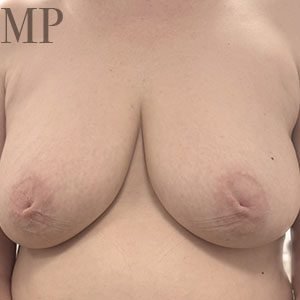
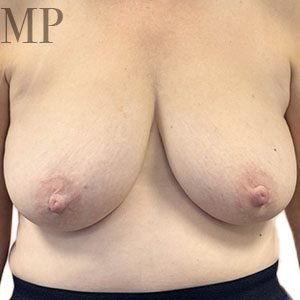
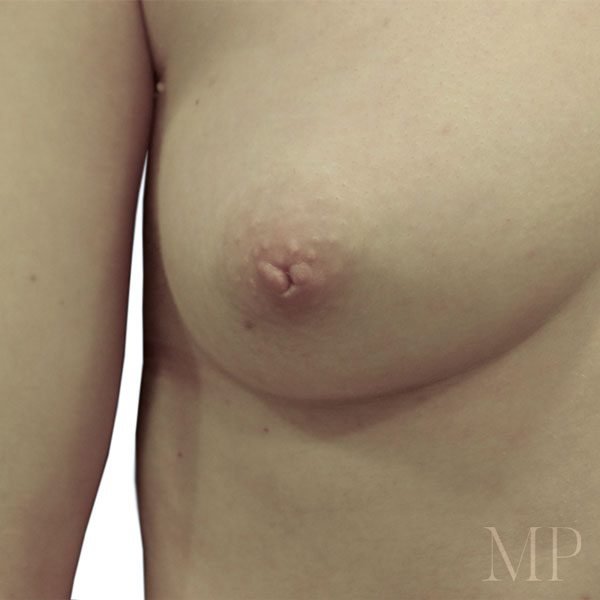
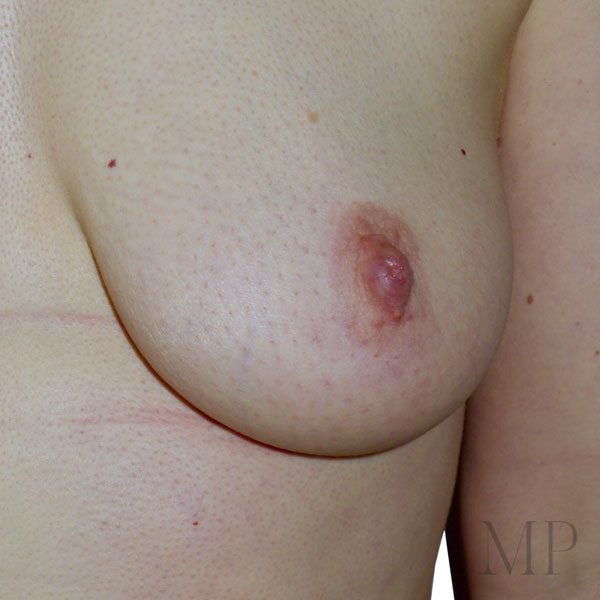
Patient Imagery
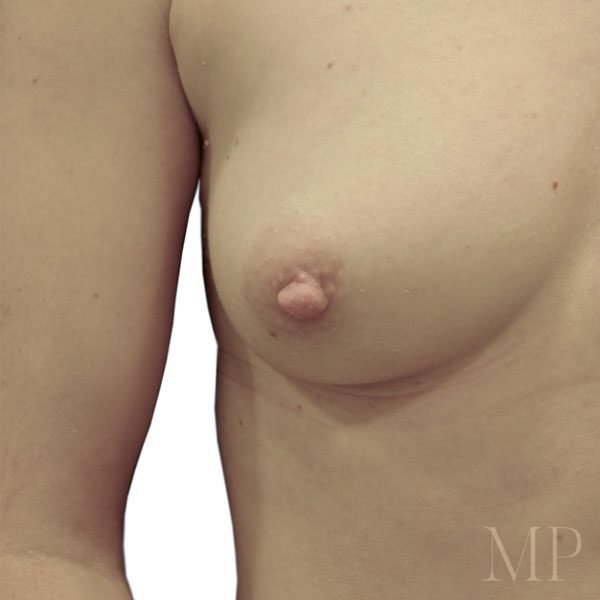
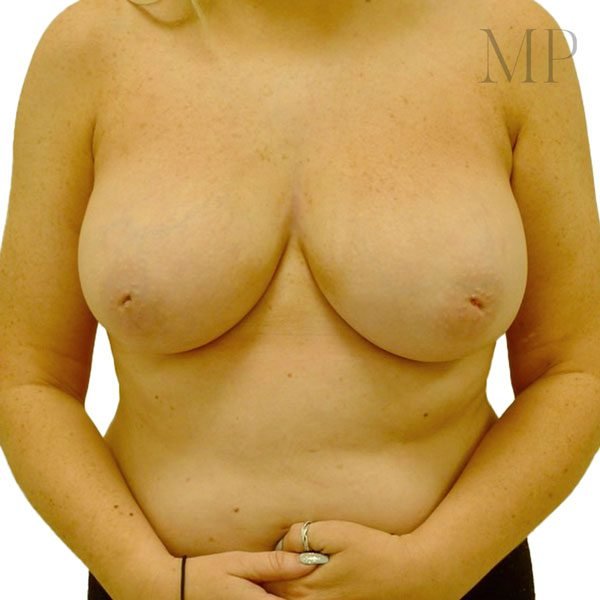
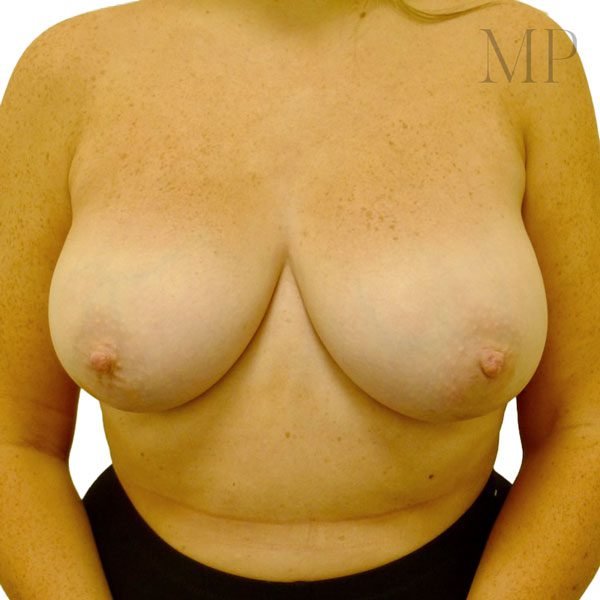
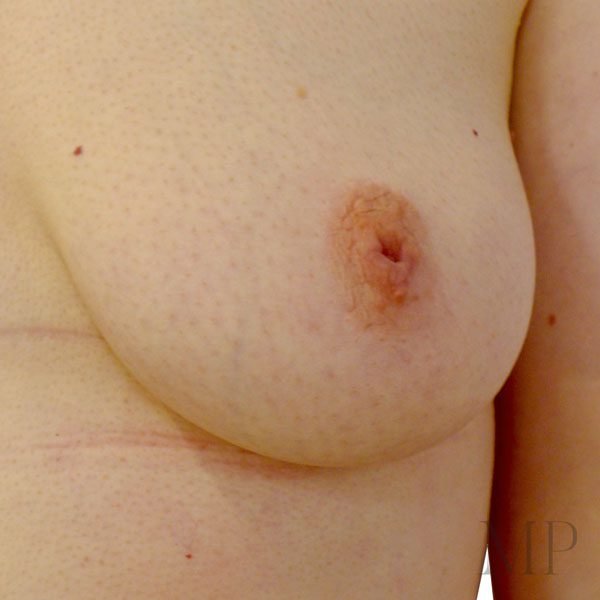
Your Recovery
Recovery Timeline
Day 1 onwards – Normal activities resumed; shower daily with dressing removable
Days 1–2 – Oral pain relief as needed
Days 3–5 – Dressings begin to peel; trim at home
7 days – Review appointment; tapes removed at original hospital
2 weeks – Moderate exercise and activity from this point
3 weeks – Review with Mr Potter to assess progress
Ongoing – Successive follow-up appointments until fully settled
Do's & Don'ts
- Wear a supportive soft bra to minimise trauma to the area for at least two weeks
- Shower daily; dressing can be removed to allow washing then replaced
- Moderate exercise and activity for at least two weeks to prevent local irritation
- Avoid strenuous exercise for 2 weeks
- Sleep on your back during the initial post-operative period
- Do not smoke until Mr Potter confirms at follow-up that all is healing well — smoking impairs wound healing and increases the risk of complications
- Do not drive until you can safely perform an emergency manoeuvre
The Procedure
- Infection — can manifest as redness, discharge, pain or temperature; uncommon; the dressing and aftercare regime is designed to minimise this; oral antibiotics may be prescribed where the nipple is ulcerated
- Scarring — incisions are small and placed at the base of the nipple; healing well in most cases; hypertrophic or keloid scarring is rare and more likely in patients with a previous history of abnormal scarring
- Swelling and bruising — expected; settles within a week
- Altered or loss of nipple sensation — most patients notice altered sensation following surgery; this is likely to settle over time; rarely, increased or permanently reduced sensation occurs
- Recurrence of inversion — rare; if recurrence occurs in the short term it may settle, or may require discussion of further surgery; Mr Potter’s outcome data reflects an exceptionally low revision rate
- Permanent loss of breast feeding from the operated side — the procedure involves dividing the ducts, which affects the ability to breast feed on that side; this should be considered carefully before proceeding
- Over or underdone correction — Mr Potter will discuss realistic expectations during consultation
- Appearance not meeting expectations — the final appearance of the nipple may not be exactly as anticipated; Mr Potter will discuss what is and is not achievable during consultation
- Haematoma — if the area becomes more painful or distended after the procedure, contact the hospital for review; blood clot removal may be required
- Loss of the nipple or areolar complex — exceptionally rare
- Further procedures — where any adjustments are needed, Mr Potter and his hospital teams are happy to facilitate further surgery
What Patients Say
Frequently Asked Questions
What causes an inverted nipple?
Inverted nipples are caused by milk ducts that are shorter than normal, tethering the nipple inward. The condition typically develops post-puberty and ranges in severity from Grade 1 (nipple protrudes occasionally) to Grade 3 (permanently inverted).
Can inverted nipples be corrected without surgery?
Grade 1 inversions can sometimes be resolved through gradual stretching using suction cups over an extended period. Grade 2 and 3 inversions generally require surgery for permanent correction. Mr Potter will advise on the most appropriate approach for your grade of inversion.
Will I lose the ability to breast feed?
The surgical procedure involves dividing the ducts that tether the nipple, which affects the ability to breast feed from the operated side. Patients who wish to breast feed in future should consider this carefully before proceeding — Mr Potter will discuss it in detail during consultation.
Is the procedure painful?
A topical anaesthetic cream is applied before the local anaesthetic injection to minimise discomfort. The nipple is fully anaesthetised before the procedure begins. Most patients report no significant pain during or after surgery. Normal activities can be resumed immediately.
Will there be visible scarring?
Scarring is minimal. Incisions are small and placed at the base of the nipple. Hypertrophic or keloid scarring is rare and most likely in patients with a previous history of abnormal scarring. Most patients report that scarring is not a concern.
Will nipple sensation be affected?
Most patients notice some altered sensation following surgery. This typically settles over time. Rarely, increased or permanently reduced sensation occurs. Mr Potter will discuss this during consultation.
Where does Mr Potter perform inverted nipple correction?
At the Manor Hospital in Oxford, Ridgeway Hospital in Swindon.
Book a Consultation
Contact us if you have any health concerns or are looking to get a consultation. You can contact Matthew Potter by using the form below or contact him through one of the available telephone numbers or email addresses listed on this page.
Private Secretary & All Correspondence
T. 07917 965717
Swindon - Ridgeway Hospital
T. 01793 814848
Cheltenham - ProDerm, Festival House
T. 0800 0489230
Oxfordshire - Stratum Clinic,
Wootton Business Park
T. 01865 320790
Cotswold Surgical Partnership, Royal Wootton Bassett
T: 0808 2803560
Oxford - The Manor Hospital
T. 01865 307777
Contact Lissie on 07917 965717 or use the form below.