



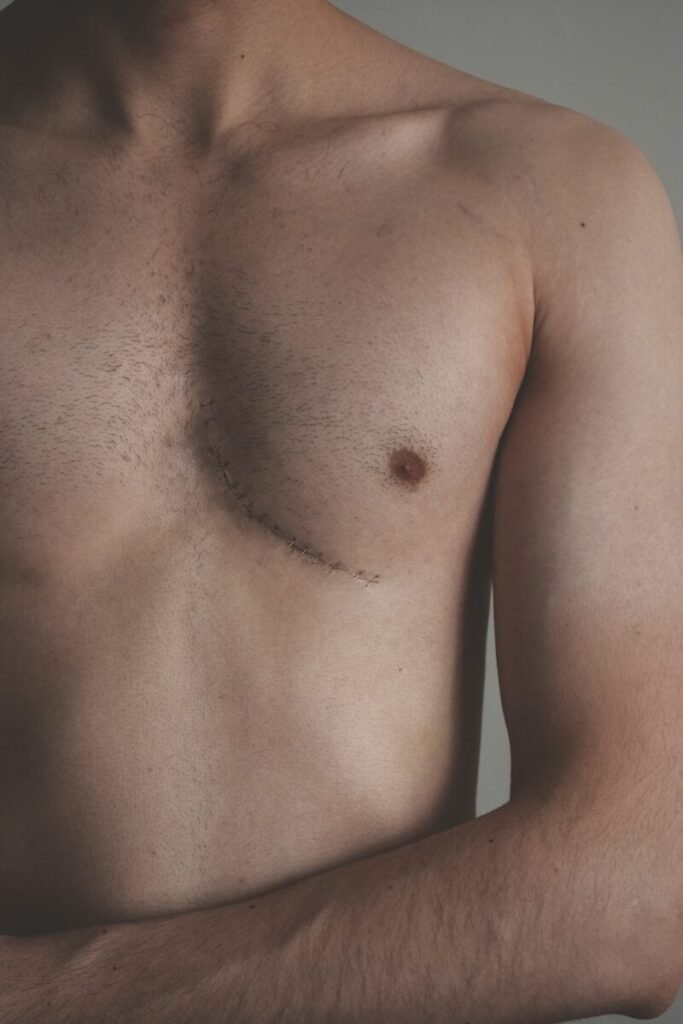
Scar Revision
Why Mr Potter
Higher degree in wound healing and scar research and management
Full range of surgical and non-surgical scar treatments
Performing scar revision surgery since 2000
PHIN patient satisfaction score: 99%
PHIN is an independent government audit of consultant patient outcomes, randomly sampling post-operative patients. A 99% satisfaction score places Mr Potter among the highest-rated plastic surgeons in the country.
When scars remain abnormal
- Thickened or raised (hypertrophic scarring)
- Keloid — raised scarring that extends beyond the original wound margins
- Dimpled or tethered to underlying tissue
- Marked with cross-hatching from previous sutures
- Orientated in a direction that makes them more noticeable
- Persistently discoloured
How scars mature
Mr Potter will assess the scar at consultation and recommend the most appropriate approach. Options include:
Injection therapies
Fat grafting and dermal fat grafting
Pressure devices
Fillers
Surgical excision and reorientation
removing the abnormal scar tissue and re-closing the wound using techniques that reduce tension, place the incision within natural skin folds, and optimise the healing environment.
What Patients Say
Frequently Asked Questions
When is the right time to treat an abnormal scar?
Most scars should be given at least one to two years to mature before surgical revision is considered — the final result often continues to improve for up to two years. However, non-surgical treatments such as steroid injections can begin earlier, particularly for actively raised or hypertrophic scars. Mr Potter will assess your scar and advise on the most appropriate timing.
What makes a scar abnormal?
A scar that has not followed the expected maturation pathway — remaining thickened, raised, tethered, discoloured, or poorly positioned after sufficient time — is considered abnormal. The cause varies and understanding it is part of planning the right treatment.
What is the difference between a hypertrophic scar and a keloid?
A hypertrophic scar is raised and thickened but stays within the original wound margins. A keloid extends beyond those margins, growing into surrounding skin. Both can be addressed but keloids are more complex to treat and have a higher recurrence risk — Mr Potter will discuss this in detail during consultation.
Will scar revision leave another scar?
Surgical scar revision replaces one scar with another — the aim is a scar that is less noticeable, better positioned, or less symptomatic than the original. Mr Potter will be honest about what is and is not achievable and will show you examples during consultation.
Is surgery always required for scar revision?
No. Many abnormal scars respond well to non-surgical approaches — steroid injections, pressure therapy, fat grafting, or fillers. Mr Potter will assess the scar and recommend the least invasive approach that is likely to achieve a meaningful improvement.
Where does Mr Potter perform scar revision?
At the Manor Hospital in Oxford, Ridgeway Hospital in Swindon, Stratum Clinic in Wootton Oxfordshire, ProDerm in Cheltenham, and Interface Business Park in Royal Wootton Bassett.
Book a Consultation
Contact us if you have any health concerns or are looking to get a consultation. You can contact Matthew Potter by using the form below or contact him through one of the available telephone numbers or email addresses listed on this page.
Private Secretary & All Correspondence
T. 07917 965717
Swindon - Ridgeway Hospital
T. 01793 814848
Cheltenham - ProDerm, Festival House
T. 0800 0489230
Oxfordshire - Stratum Clinic,
Wootton Business Park
T. 01865 320790
Cotswold Surgical Partnership, Royal Wootton Bassett
T: 0808 2803560
Oxford - The Manor Hospital
T. 01865 307777
Contact Lissie on 07917 965717 or use the form below.