



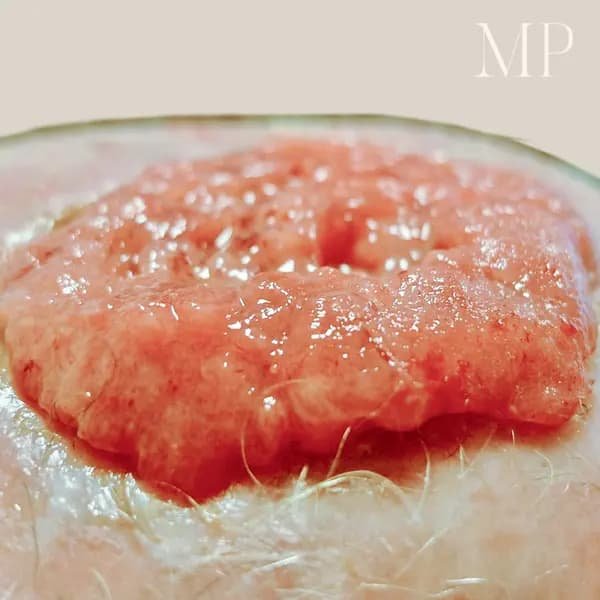
Squamous Cell Carcinoma
Squamous cell carcinoma (SCC) is the second most common skin cancer. Like basal cell carcinoma (BCC), SCC most commonly appears on the face. However, unlike BCC, it carries a small but real risk of spreading to the lymph nodes (approximately 2%). Where necessary, SCC cases are reviewed at a multidisciplinary team (MDT) meeting, where a panel of specialist doctors considers all available treatment options to ensure the most appropriate care.
Mr Matthew Potter is the senior author of the UK’s largest published series of squamous cell carcinomas—the second largest series worldwide. His complete excision rate of 99% exceeds the national average of 95%. He has specific published expertise in excision margins for SCC and the importance of specialist surgical skills when treating complex head and neck tumours where achieving a clear deep margin is critical.
Why Mr Potter
Senior author — UK’s largest SCC series (second largest worldwide)
99% complete excision rate — national average 95%
0% local flap loss in SCC reconstruction (last 3 years)
0% full thickness graft loss in SCC reconstruction (last 3 years)
Less than 1% return to theatre following SCC excision
PHIN patient satisfaction score: 99%
PHIN is an independent government audit of consultant patient outcomes, randomly sampling post-operative patients. A 99% satisfaction score places Mr Potter among the highest-rated plastic surgeons in the country.
Treatment & Reconstruction
Excision and reconstruction
Where SCC has spread to the lymph nodes — in the groin, armpit or neck — Mr Potter has undertaken well over 400 neck dissection and 400 superficial parotidectomies for skin tumours that have spread to the lymph nodes.
Managing lymph node spread
All SCC cases are reviewed at a multidisciplinary skin cancer meeting before treatment decisions are finalised. All treatment options — surgery, radiotherapy, and combinations — are considered.
Multidisciplinary review
Where appropriate you will have the non surgical alternatives such as immunotherapy and radiotherapy discussed in a clinic with a specialist oncological consultant along with discussions of the surgery. These joint clinics will explain the risks and benefits of each treatment modality. MDT clinics, we feel allow the patient greater opportunity to find the solution that suits their needs. It may well be that you need several of these joint clinics to make the right and appropriate decision. Time in-between these clinics allows you to reflect on the most suitable decision.
Non surgical therapies
What Patients Say
I had a diagnosis of a squamous cell carcinoma on my nose in 2016. After one attempt to remove this in day surgery at the Churchill Hospital the condition recurred. I got a referral to Consultant Plastic Surgeon Matthew Potter to explore my options. Matt was brilliant from the outset.
He explained clearly about possibilities of radiotherapy or surgery or a combination of the two, with clear and honest advice on the pros and cons of each. In the end I opted for full surgery, which entailed removing most of the skin across my entire nose and replacing it with a graft from the side of my neck.
In practice, he carried out the work using sections to assess whether he could remove all of the cancerous skin. This seems to have been highly successful and the whole carcinoma was removed with a healthy margin all around. Despite the radical nature of this procedure, the graft has taken well and healed almost invisibly.
I cannot praise Matt and his team’s skill enough in achieving this result. Since then, Matt and his team at the Blenheim Head and Neck unit continues to monitor me, during which they have checked me over at regular intervals to ensure there has been no recurrence of the SCC or related complications anywhere on my body – none so far!
These inspections are always conducted with great thoroughness, courtesy and professionalism, and inspire confidence that I am receiving the best possible treatment. I cannot thank Mr Potter enough for the efforts of him and his team and would recommend him without reservation.
He showed us photos, managing expectation, his skills were amazing, the results fantastic. I can’t thank him enough and strongly recommend him as he is a very talented surgeon.
Frequently Asked Questions
What is squamous cell carcinoma?
Squamous cell carcinoma is the second most common skin cancer, most frequently appearing on the face. Unlike BCC, SCC carries a small risk of spreading to the lymph nodes — approximately 2% — which is why all cases are reviewed by a multidisciplinary team.
How is SCC different from BCC?
Both are common skin cancers that most often appear on the face and are primarily treated with surgery. The key difference is that SCC carries a risk of spreading to the lymph nodes; BCC very rarely does. This makes SCC management more involved and specialist MDT review standard practice.
Will my case be reviewed by a specialist team?
Yes. All SCC cases Mr Potter treats are reviewed at a multidisciplinary skin cancer meeting. A panel of specialist doctors considers all treatment options before a plan is agreed.
What happens if SCC has spread to the lymph nodes?
Mr Potter has specific expertise in lymph node dissection for patients whose SCC has spread regionally. He will discuss the findings, the implications, and the treatment options with you in detail.
Where does Mr Potter treat SCC?
At the Manor Hospital in Oxford, Ridgeway Hospital in Swindon, Stratum Clinic in Wootton Oxfordshire, ProDerm in Cheltenham, and Interface Business Park in Royal Wootton Bassett.
Book a Consultation
Contact us if you have any health concerns or are looking to get a consultation. You can contact Matthew Potter by using the form below or contact him through one of the available telephone numbers or email addresses listed on this page.
Private Secretary & All Correspondence
T. 07917 965717
Swindon - Ridgeway Hospital
T. 01793 814848
Cheltenham - ProDerm, Festival House
T. 0800 0489230
Oxfordshire - Stratum Clinic,
Wootton Business Park
T. 01865 320790
Cotswold Surgical Partnership, Royal Wootton Bassett
T: 0808 2803560
Oxford - The Manor Hospital
T. 01865 307777
Contact Lissie on 07917 965717 or use the form below.