



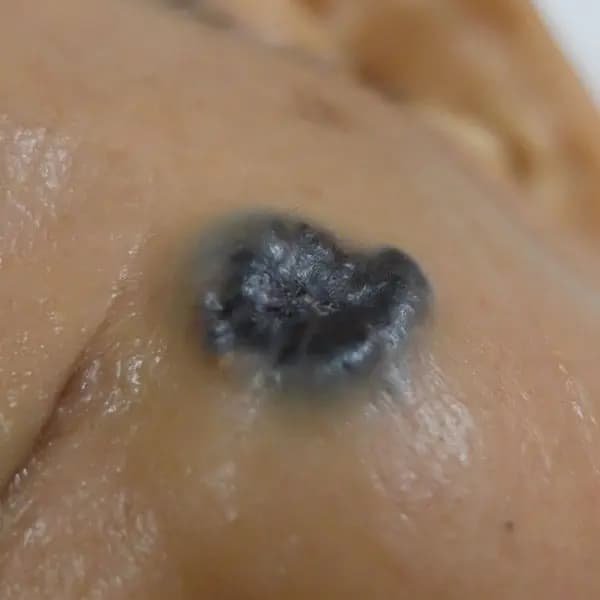
MOHS Reconstruction
Why Mr Potter
Works alongside four specialist Mohs dermatologists
0% flap loss in reconstruction following Mohs excision
0% graft loss in reconstruction following Mohs excision (last 3 years)
Less than 1% return to theatre
PHIN patient satisfaction score: 99%
PHIN is an independent government audit of consultant patient outcomes, randomly sampling post-operative patients. A 99% satisfaction score places Mr Potter among the highest-rated plastic surgeons in the country.
Mohs Surgery & Reconstruction — How It Works
What is Mohs surgery?
Mr Potter's role — reconstruction
Frequently Asked Questions
What is Mohs surgery?
Mohs micrographic surgery removes skin cancers layer by layer under local anaesthetic, with each layer examined under microscope until no cancer cells remain. It achieves an incomplete excision rate of less than 0.1% — compared to approximately 5% with conventional excision — while removing the smallest possible amount of tissue.
Who performs the Mohs surgery?
Mohs surgery is performed by a specialist dermatologist. Mr Potter performs the reconstruction of the defect following Mohs excision. He works alongside four Mohs dermatologists.
Which cancers is Mohs surgery used for?
Most commonly BCC and SCC, particularly in cosmetically or functionally sensitive locations — around the eye, nose, ear, and lip — where preserving surrounding tissue is important.
What does the reconstruction involve?
The reconstruction technique depends on the size and location of the defect after Mohs excision. It may involve direct closure, a local flap using adjacent skin, or a skin graft. Mr Potter uses aesthetic surgical principles to minimise scarring and preserve function in all cases.
Where does Mr Potter perform Mohs reconstruction?
At the Manor Hospital in Oxford, Ridgeway Hospital in Swindon, Stratum Clinic in Wootton Oxfordshire, ProDerm in Cheltenham, and Interface Business Park in Royal Wootton Bassett.
Book a Consultation
Contact us if you have any health concerns or are looking to get a consultation. You can contact Matthew Potter by using the form below or contact him through one of the available telephone numbers or email addresses listed on this page.
Private Secretary & All Correspondence
T. 07917 965717
Swindon - Ridgeway Hospital
T. 01793 814848
Cheltenham - ProDerm, Festival House
T. 0800 0489230
Oxfordshire - Stratum Clinic,
Wootton Business Park
T. 01865 320790
Cotswold Surgical Partnership, Royal Wootton Bassett
T: 0808 2803560
Oxford - The Manor Hospital
T. 01865 307777
Contact Lissie on 07917 965717 or use the form below.