



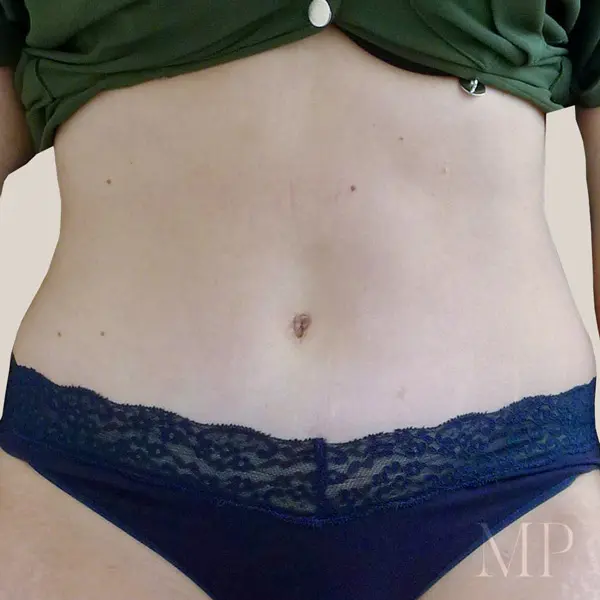
Abdominoplasty | Tummy Tuck
Why Mr Potter
16 years performing abdominoplasty
0% unplanned return to theatre
0% wound dehiscence
Average post-operative stay: 2 nights
PHIN patient satisfaction score: 99%
PHIN is an independent government audit of consultant patient outcomes, randomly sampling post-operative patients. A 99% satisfaction score places Mr Potter among the highest-rated plastic surgeons in the country.
Our Technique
Mini Abdominoplasty
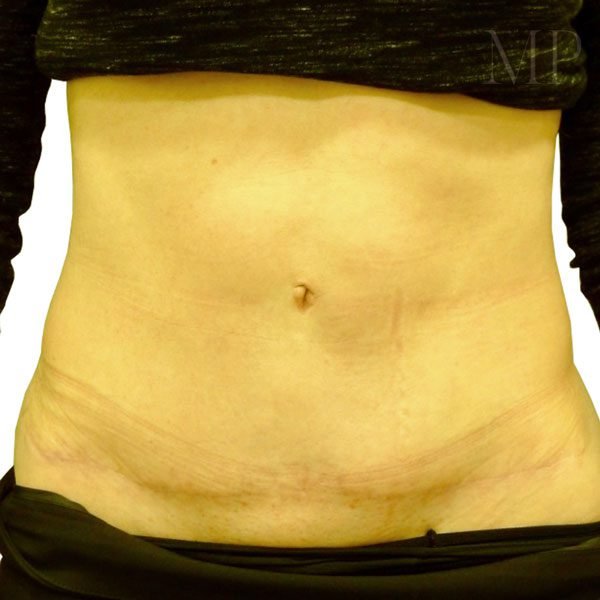
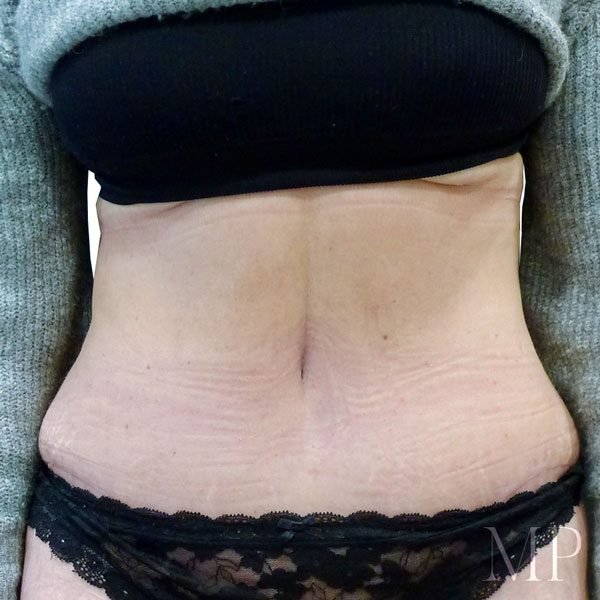
The mini abdominoplasty addresses excess skin in the lower abdomen only. Horizontal ellipse is made above the pubic bone , leaving a single scar below the bikini line. This procedure can be performed as a day case and does not resite the umbilicus.
Full Abdominoplasty
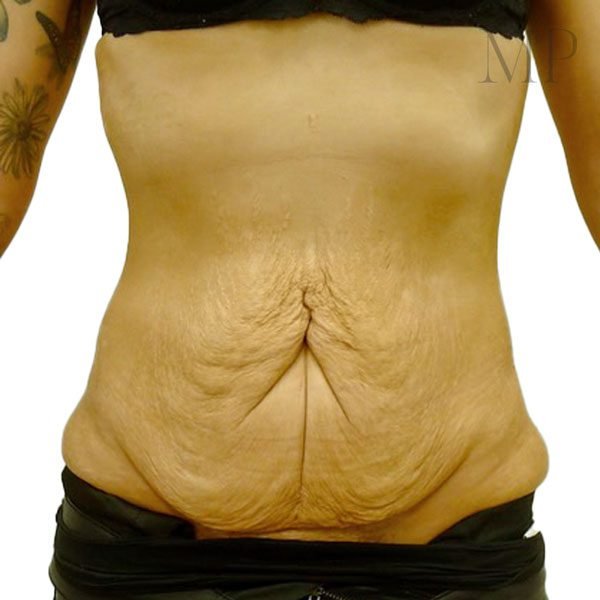
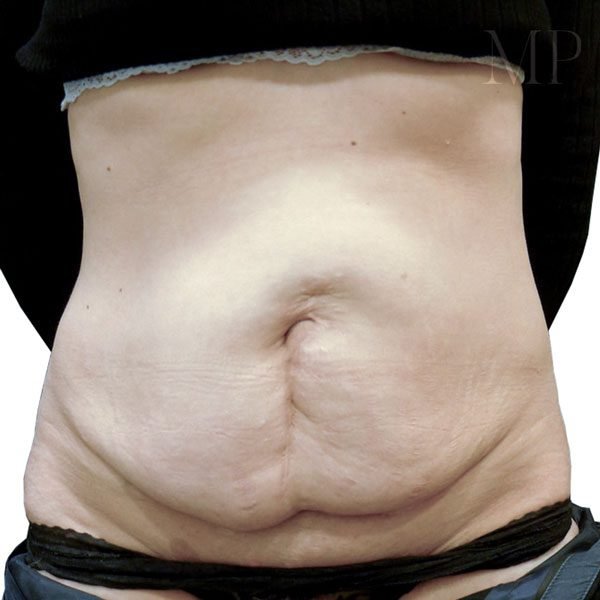
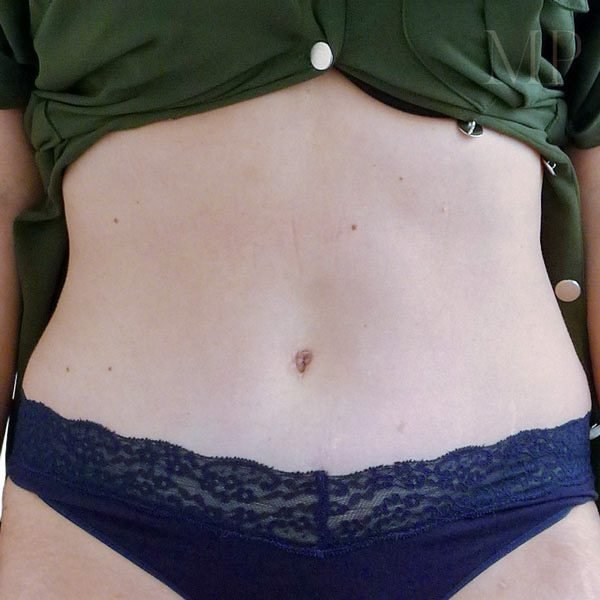
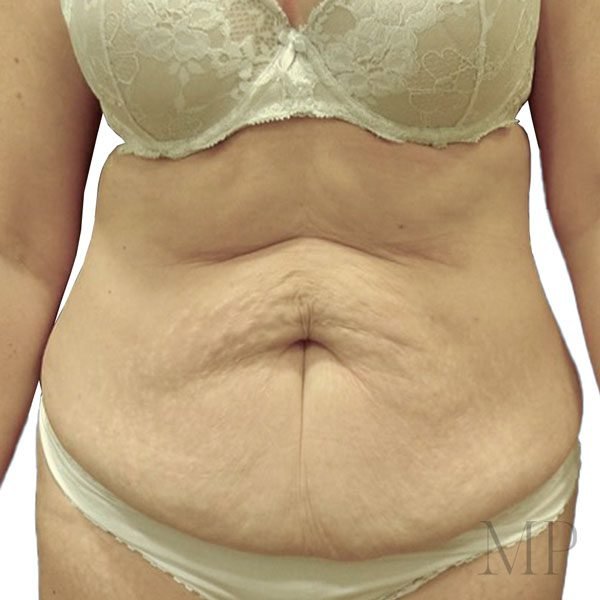
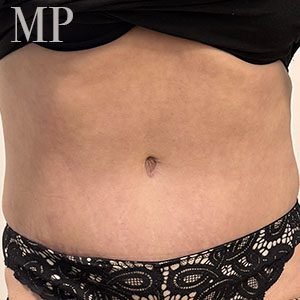
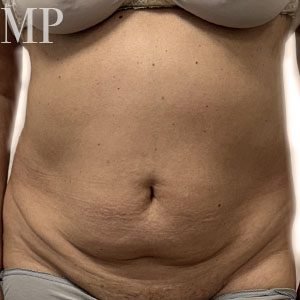
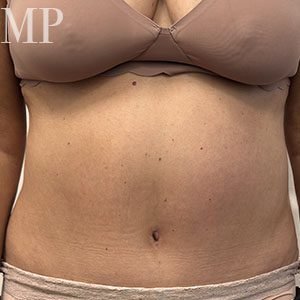
Full abdominoplasty address the entire abdominal skin from below the rib cage to the pubis and the pelvis. The skin is excised, the abdominal skin re-draped and sutured closed, and the umbilicus resited — concealed within its own natural indentation so that the scar around it is visible only on close inspection. The main scar sits below the bikini line.
Two approaches — chosen for your anatomy
Where the abdominal muscles have separated in the midline, Mr Potter repairs them — a technique called rectus plication — as part of the full abdominoplasty. He also plicates Scarpa’s fascia, the deeper fascial layer. Together they restore the structural integrity of the abdominal wall and contribute to a flatter, firmer long-term result. They contribute to the flattening hour glass shape of the abdomen
Muscle and fascial repair
Abdominoplasty is frequently performed alongside liposuction to reduce fat towards the outer abdomen and flanks, feathering the transition between the treated front and the surrounding areas. Mr Potter will assess whether simultaneous liposuction is appropriate for you during consultation.
Simultaneous liposuction
Patient Imagery
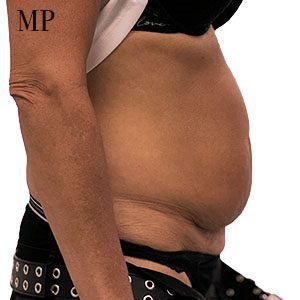
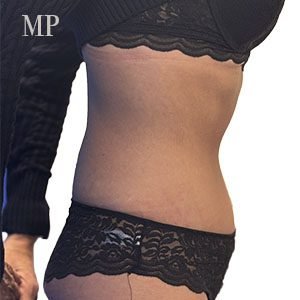
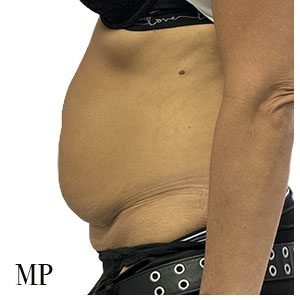
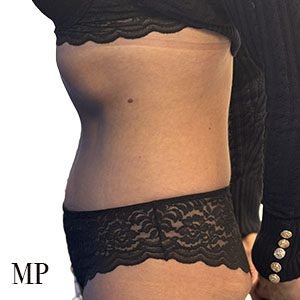
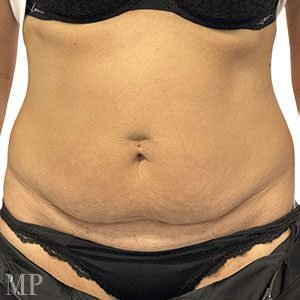
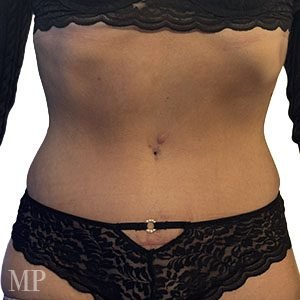
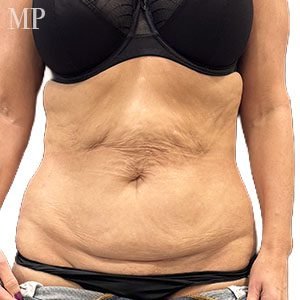
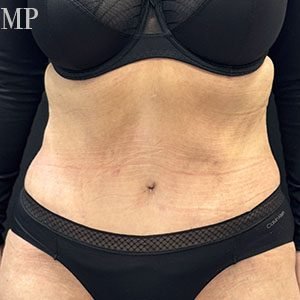
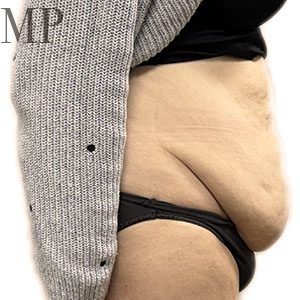
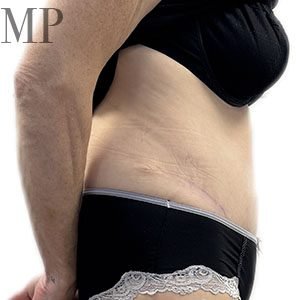
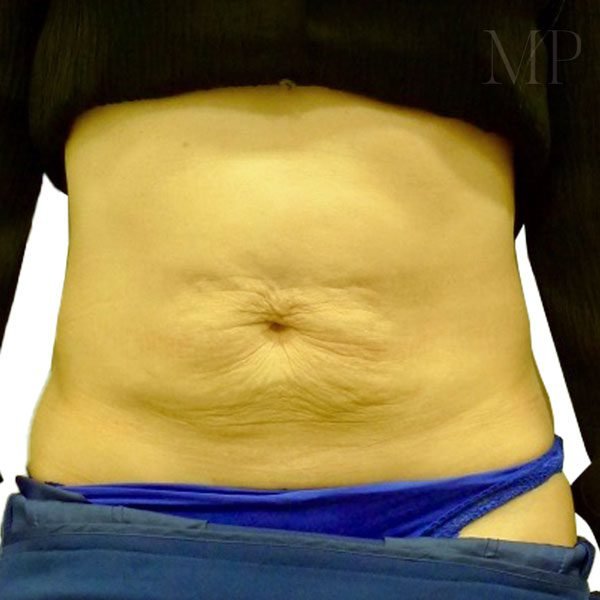
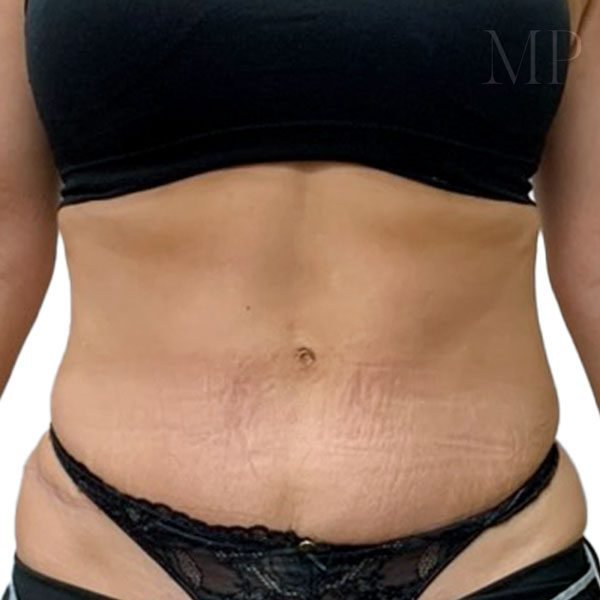
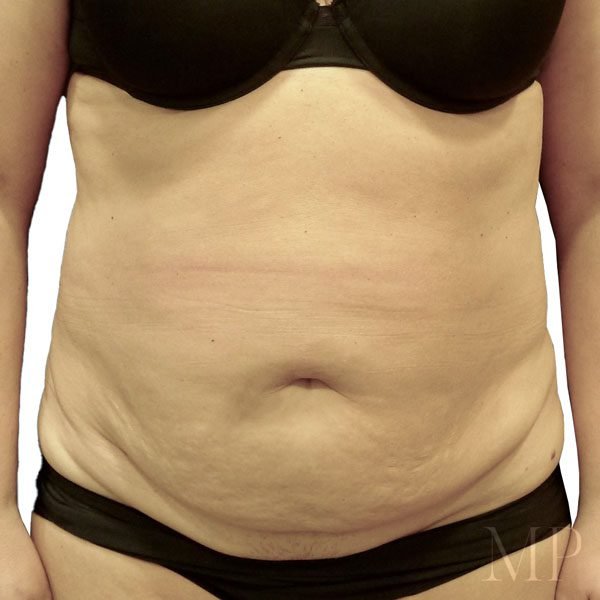
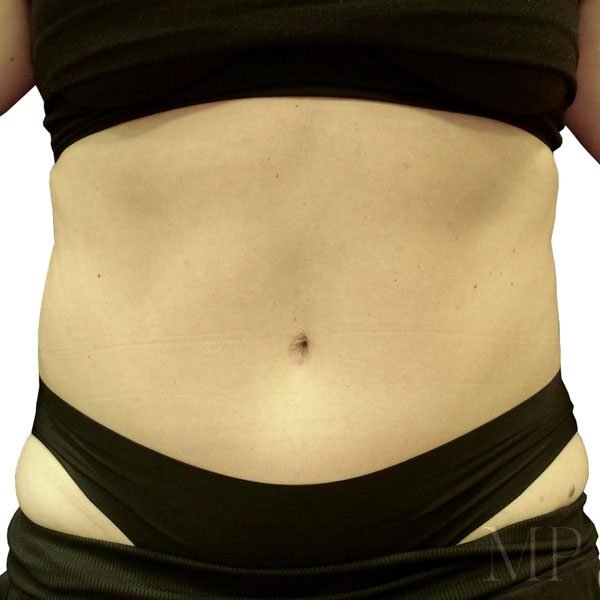
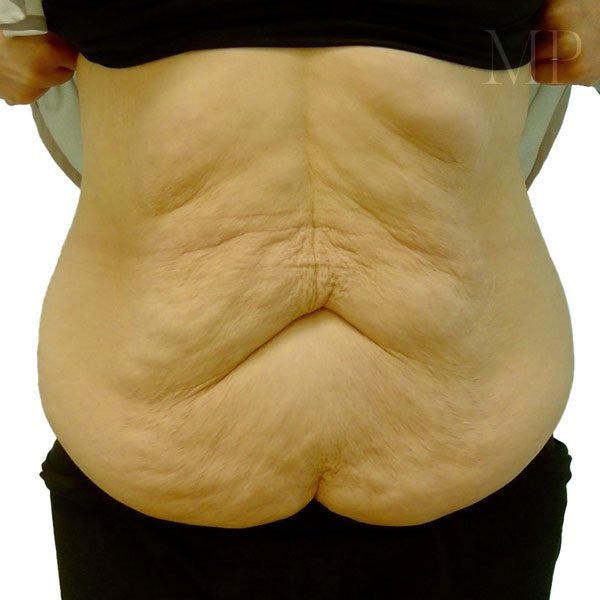
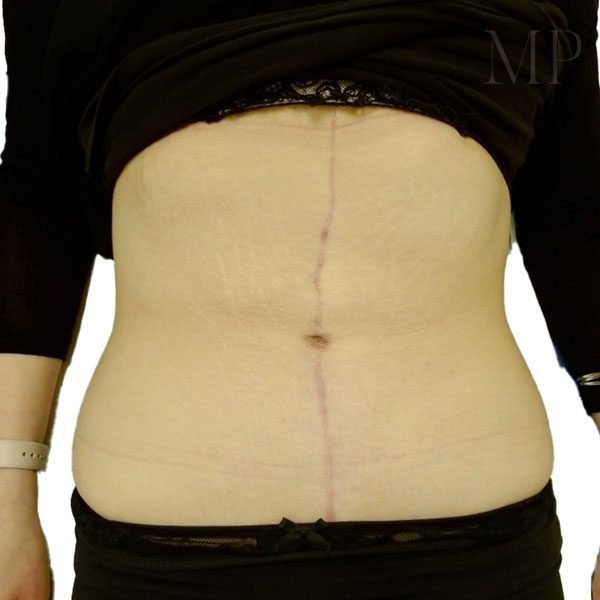
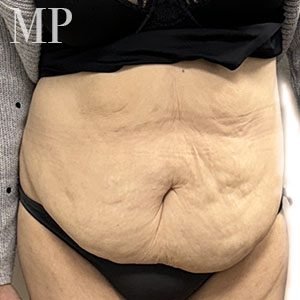
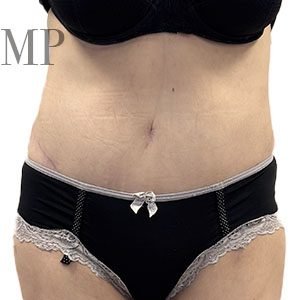
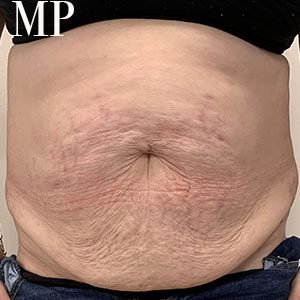
Your Recovery
Recovery Timeline
Days 1 – Shower encouraged; wound tapes washed and air dried; drains removed if used
Days 2–4 – Bruising develops; swelling present; oral pain relief as needed for 2–4 days
Days 5–7 – Relative normal mobility returning
7 days – Wound review at original hospital; wounds and operative sites checked
3 weeks – Review with Mr Potter
2 weeks – Return to low-demand activities such as office work
4 weeks – Return to driving when able to perform emergency manoeuvre
6 weeks – Strenuous activities and heavy lifting avoided until this point
8 weeks – Return to normal activities
Do's & Don'ts
- Shower from day one; wash wound tapes thoroughly and allow to air dry
- Wear a supportive compression garment day and night for 6 weeks following the procedure
- Sleep in a comfortable position; avoid positions that put tension on the wound
- Take oral pain relief for the first two to four days as needed
- Avoid coughing and straining for 2 weeks
- Avoid strenuous exercise for 6 weeks
- Avoid lifting heavy weights for 8 weeks
- Do not drive until you can safely perform an emergency manoeuvre — on average at least 4 weeks
- Return to low-demand office work within 2 weeks
- Return to normal activities at 8 weeks
The Procedure
What Happens on the Day
The procedure takes 3-4 hours. Sutures are dissolving other than those around the umbilicus
You will be admitted on the day of your procedure and seen by the anaesthetist and Mr Potter before going to theatre. Your abdomen will be marked with you standing and sitting, and you will have the opportunity to ask any final questions before surgery begins.
The procedure is performed under general anaesthetic and takes approximately two to three hours. All sutures are dissolving. Wounds are dressed with skin-coloured surgical tape designed to be showered from day one. Raised wound edges from the deeper sutures will flatten at around one month, producing the optimal long-term scar.
- Scarring — scars run above the pubic hairline from hip to hip; initially puckered, settling to flat scars at around one month; abnormal lumpy or raised scarring is rare
- Infection or wound breakdown — uncommon; managed with dressings at the hospital
- Pain — Mr Potter injects the area with local anaesthetic during the procedure to limit post-operative pain; oral pain relief typically needed for two to four days
- Swelling — expected; settles within a week in most cases; rarely may take longer
- Bruising — expected; settles within a week
- Bleeding / haematoma — rare; drains may be placed during surgery to reduce this risk; return to theatre may be required to remove blood and stop any bleeding
- Changes in skin sensation — common around the operative site including the groin, flanks and lower tummy; typically resolves with time; rarely permanent numbness occurs
- Asymmetry
- Fat necrosis — rare; loss of fat volume after the procedure that may cause lumps or an oily discharge; managed with dressings or massage
- Pulling on the pubic area — the pubic area may feel elevated after the procedure due to tension; improves as skin tension eases with time
- Over / under resection — Mr Potter errs toward under-resection, which is more straightforwardly corrected than over-resection
- DVT / pulmonary embolus — specialist stockings and blood-thinning injections are provided during your stay
- Further procedures — where any adjustments are needed, Mr Potter and his hospital teams are happy to facilitate further surgery to ensure you are happy with your result
What Patients Say
Frequently Asked Questions
What is abdominoplasty?
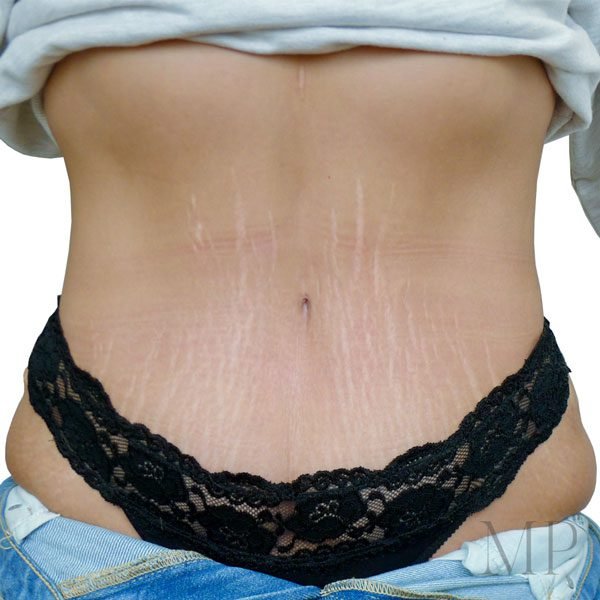
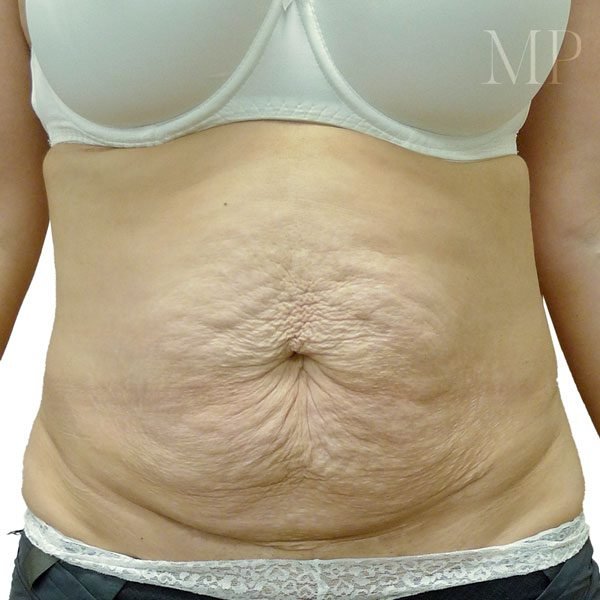
Abdominoplasty — commonly called a tummy tuck — removes excess skin and fat from the abdomen and tightens the underlying muscle and fascial layers. It addresses skin excess, stretch marks, and muscle separation that cannot be corrected through diet and exercise alone.
What is the difference between a mini and full abdominoplasty?
A mini abdominoplasty removes excess skin from the lower abdomen only and does not resite the umbilicus. A full abdominoplasty addresses the entire abdominal skin, resites the umbilicus, and allows Mr Potter to tighten the deep muscle and fascial layers. The full procedure also commonly removes stretch marks in the lower abdomen.
Can abdominoplasty be combined with liposuction?
Yes — and it frequently is. Liposuction to the flanks and outer abdomen is often performed alongside abdominoplasty to feather the transition between the treated area and the surrounding skin. Mr Potter will assess whether this is appropriate for you.
Will there be visible scarring?
Yes — abdominoplasty produces a permanent scar running above the pubic hairline from hip to hip. The scar is placed below the bikini line and is initially puckered, settling to flat at around one month. Mr Potter will discuss what to expect during consultation.
How long is the recovery?
Most patients return to office-based work within two weeks. Normal mobility returns within five to seven days. Strenuous exercise and heavy lifting should be avoided for six to eight weeks. Mr Potter reviews you at seven days and at three weeks.
Is abdominoplasty a weight loss procedure?
No. Abdominoplasty is most effective for patients who are at or near a stable weight. It removes excess skin and tightens muscle — it is not a substitute for weight management.
Where does Mr Potter perform abdominoplasty?
At the Manor Hospital in Oxford, Ridgeway Hospital in Swindon.
Book a Consultation
Contact us if you have any health concerns or are looking to get a consultation. You can contact Matthew Potter by using the form below or contact him through one of the available telephone numbers or email addresses listed on this page.
Private Secretary & All Correspondence
T. 07917 965717
Swindon - Ridgeway Hospital
T. 01793 814848
Cheltenham - ProDerm, Festival House
T. 0800 0489230
Oxfordshire - Stratum Clinic,
Wootton Business Park
T. 01865 320790
Cotswold Surgical Partnership, Royal Wootton Bassett
T: 0808 2803560
Oxford - The Manor Hospital
T. 01865 307777
Contact Lissie on 07917 965717 or use the form below.